
How Rice Husk WPC Boards Improve Interior Panel Durability
What Is a Rice Husk WPC Board?
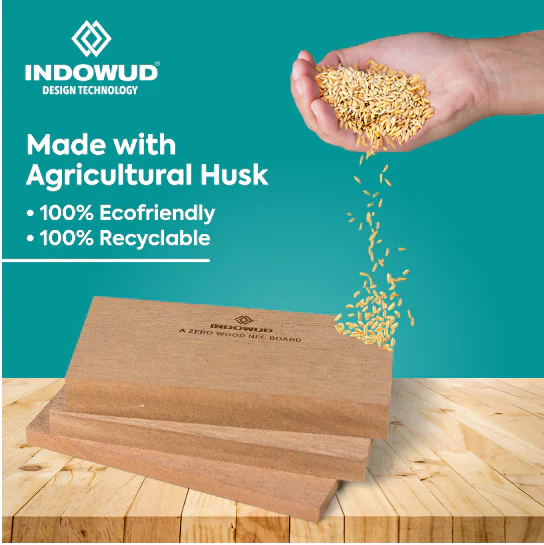
A Rice Husk WPC Board is a type of modern building material designed for durability and sustainability. Many architects, interior designers, and construction professionals prefer rice husk WPC boards for interior and exterior panels because they combine strength with environmentally responsible manufacturing.
These boards are made by combining rice husk with thermoplastics and other binding materials. The result is a composite material that offers stability, moisture resistance, and long-term durability.
Why Durability Matters in Interior Panels
When designing the interiors of homes, offices, or commercial spaces—especially in cities like Chennai or Mumbai—durability becomes an important factor.
Interior panels face several challenges over time, including:
- Moisture and humidity
- Termite attacks
- Daily wear and tear
- Temperature changes
Traditional materials like plywood or MDF often weaken when exposed to these conditions. This is where rice husk WPC boards provide a practical advantage.
What Makes Rice Husk WPC Boards Stronger?
1. Unique Material Composition
A rice husk WPC board combines:
- Natural rice husk fibers
- Thermoplastic materials
This combination creates a composite structure that improves strength and stability. Compared to a standard WPC ply board, this structure helps maintain shape and durability even in demanding conditions.
2. 100% Termite and Borer Resistant
Unlike natural wood materials, termites cannot digest polymer-based composites.
As a result, rice husk WPC boards remain unaffected by termite attacks and wood borers. This makes them particularly suitable for Indian climates where pest damage is a common concern.
Because of this resistance, property owners often experience fewer pest control issues over time.
3. Moisture and Water Resistance
In humid environments, plywood can swell and MDF can weaken over time.
Rice husk WPC boards are designed to resist water absorption. This makes them suitable for installations in areas exposed to moisture, such as kitchens and bathrooms.
Their moisture resistance also helps maintain dimensional stability in high-humidity environments.
Rice Husk WPC Board vs Traditional Materials
| Feature | Rice Husk WPC Board | Plywood | MDF |
| Termite Resistance | Excellent | Poor | Poor |
| Water Resistance | High | Medium | Low |
| Durability | Long-lasting | Moderate | Low |
| Maintenance | Low | Medium | High |
| Stability | Very stable | Expands | Swells |
From this comparison, rice husk WPC boards provide improved durability and stability compared with many traditional interior panel materials.
Best Applications for Rice Husk WPC Boards
A reliable WPC board manufacturer often recommends these boards for areas exposed to moisture, wear, or structural stress.
Kitchen Cabinets
- Moisture-resistant
- No swelling or warping
Bathroom Panels
- Suitable for wet environments
- Resistant to fungal growth
Office Interior Panels
- Durable for long-term use
- Requires minimal maintenance
Wardrobes and Storage Units
- Strong structural support
- Protected against termite damage
Decorative Panels
- Suitable for CNC cutting
- Supports modern finishes and design patterns
Rice husk WPC boards work effectively across these applications.
Why Builders Prefer Rice Husk WPC Boards
Modern construction increasingly prioritizes sustainable materials.
Rice husk WPC boards support sustainability by:
- Reusing agricultural waste such as rice husk
- Reducing dependence on timber resources
- Offering recyclable material solutions
Because of these features, builders can combine durability with environmentally responsible construction.
How Rice Husk WPC Boards Improve Long-Term Performance
Installing rice husk WPC boards can provide several long-term advantages:
- Reduced repair requirements
- Lower replacement costs
- Longer lifecycle performance
Compared with a regular WPC ply board, rice husk WPC boards often deliver better return on investment over time.
Practical Insight: Real-Life Environmental Benefits
One important advantage of rice husk-based WPC boards is their environmental and health benefits.
These boards are designed to avoid releasing harmful chemicals into indoor air. This is especially important in enclosed environments such as homes, offices, or small rooms.
For example, Indowud NFC boards hold GreenPro certification from the Confederation of Indian Industry, indicating compliance with environmental sustainability standards.
They also include EPD (Environmental Product Declaration) verification, which evaluates the environmental impact of a product throughout its lifecycle.
Since rice husk boards use agricultural waste, they help reduce the need for timber harvesting. This makes them a strong option for environmentally conscious construction projects.
FAQ Section
Q1. What makes Rice Husk WPC Boards strong?
Rice Husk WPC Boards are strong because they combine natural rice husk fibers with polymer materials. This structure helps them resist water, termites, and structural damage over time.
Q2. Is a Rice Husk WPC Board better than a WPC Ply Board?
In many cases, yes. Rice husk WPC boards often offer improved moisture resistance, better structural stability, and longer durability compared with standard WPC ply boards. Their high density also improves screw holding strength.
Q3. Can Rice Husk WPC Boards be used for different types of panels?
Yes. They are suitable for many interior applications including kitchen cabinets, bathroom panels, wardrobes, office interiors, and decorative wall panels.
Q4. Do Rice Husk WPC Boards require regular maintenance?
No. Unlike wood-based materials, rice husk WPC boards generally do not require frequent polishing, chemical treatments, or pest control services.
Final Thoughts
If you are looking for a material that combines strength, durability, and low maintenance, rice husk WPC boards provide a reliable option.
They offer improved resistance to moisture, termites, and environmental wear while also supporting sustainable construction practices.
For modern interior panels, rice husk WPC boards represent a practical solution that balances long-term performance with environmental responsibility. Indowud.com





Leave a Reply