
Reasons Why Interior Designers Prefer Rice Husk Based Partition Boards
Although aesthetics are important in the interior design profession, modern interior designers are also concerned with creating functional spaces that can adapt to changing needs. As materials used in furniture and décor continue to evolve, rice husk partition boards like Indowud NFC are increasingly seen as part of the future of modern interior design.
Today, designers need materials that are flexible, durable, and environmentally responsible. Rice husk partition boards provide a practical solution for dividing and organizing spaces across different types of projects—from small offices to large residential interiors.
Why are interior designers turning to rice husk partition boards? Here are several reasons why these materials are helping shape the future of interior design.
1. Sustainability Is No Longer Optional
Sustainability has become a central focus in modern architecture and interior design. Designers now consider the environmental impact of the materials they select.
Rice husk partition boards like Indowud NFC are made from the outer shells of rice grains, which are agricultural by-products. Instead of being burned or discarded, this material is converted into durable construction boards.
This approach supports a circular economy, where waste materials are reused as valuable resources.
Rice husk boards offer several sustainability advantages:
- Made from agricultural waste instead of timber
- 100% recyclable
- Free from harmful chemicals such as formaldehyde
- Manufactured with a lower environmental footprint
Architects working on green buildings often look for certifications such as EPD (Environmental Product Declaration) and GreenPro certification, which make materials like Indowud NFC attractive alternatives to traditional interior panels.
2. Excellent Moisture Resistance for Indian Conditions
Humidity is a major challenge in interior design, especially in tropical climates.
Conventional boards such as MDF or plywood may swell, warp, or deteriorate when exposed to moisture over time.
Rice husk partition boards like Indowud NFC are engineered to address these issues through their composition and manufacturing process. As a result, they provide strong moisture resistance, making them suitable for environments with high humidity levels.
3. Built-In Protection Against Termites and Pests
Durability is another key factor architects must consider when selecting interior materials.
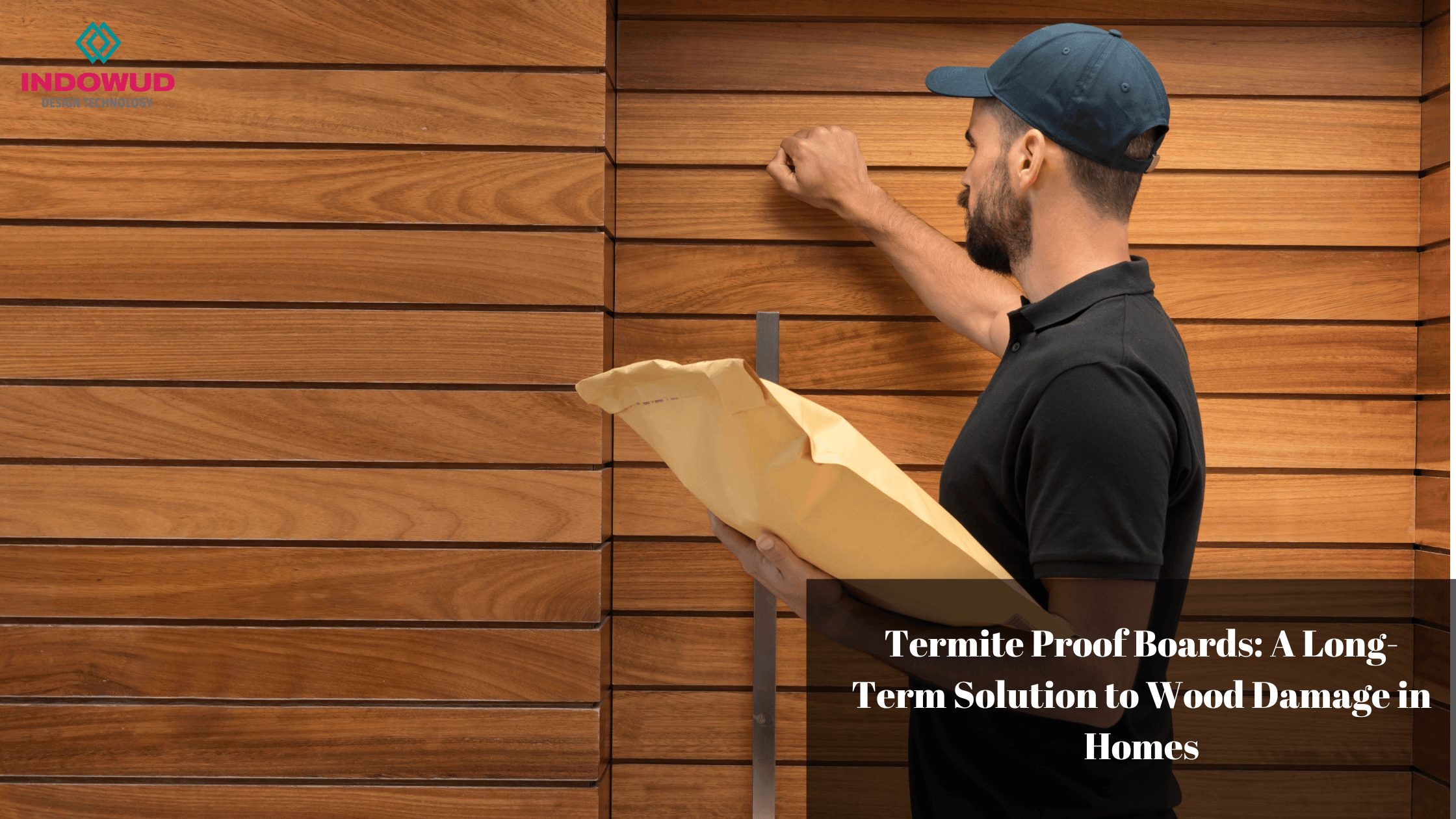
Termite infestations are common in many regions, and wood-based panels are often vulnerable to pest damage. When furniture or partitions are attacked by borers or termites, repair or replacement can become costly.
Rice husk boards offer natural resistance to termite attacks, helping extend the lifespan of furniture, partitions, and other interior structures.
4. Flexibility in Design and Modular Applications
Interior designers frequently use rice husk boards in modern design projects due to their flexibility and adaptability.
They are widely used for:
- Office partitions and meeting rooms
- Home space dividers
- Retail display installations
- Hotel and hospital interiors
These boards allow designers to create private zones or functional spaces without major construction work.
Another advantage is their compatibility with various finishes. Rice husk boards can work well with stains, primers, varnishes, laminates, and paints, allowing designers to easily customize interior aesthetics.
5. Superior Performance with Aesthetic Appeal
Interior designers require materials that combine durability with visual appeal.
Rice husk partition boards provide both.
They offer:
- Smooth surfaces suitable for high-quality finishes
- Compatibility with paints, veneers, and laminates
- Decorative and textured design possibilities
Beyond aesthetics, they also provide additional functional benefits such as:
- Acoustic performance for quieter environments
- Thermal resistance for improved comfort
- Long-term durability for everyday use
The Growing Role of Rice Husk Boards in Interior Panels
Interior panels are an essential part of modern interior design, serving both structural and decorative purposes.
Rice husk partition boards are becoming increasingly popular for interior panels because they provide a combination of:
- Environmental sustainability
- Reliable long-term performance
- Faster installation and easier maintenance
As designers move away from materials that either consume excessive natural resources or lack durability, rice husk boards provide a balanced solution.
Applications Across Different Spaces
The versatility of rice husk partition boards allows them to be used across multiple sectors.
Residential Interiors
Their versatility makes them attractive for homeowners and architects designing modern homes.
Office Spaces
Modern offices rely on adaptable layouts. Partition boards allow the creation of cabins, meeting rooms, and collaborative areas with minimal construction.
Retail and Hospitality
Retail stores and hospitality spaces use these boards for displays, decorative partitions, and durable surfaces.
Healthcare and Education
In hospitals and schools, durability and hygiene are critical. Rice husk boards provide long-lasting surfaces that are easy to maintain.
Health and Safety Advantages
As cities grow denser, indoor air quality has become an important concern.
Many traditional boards release volatile organic compounds (VOCs) over time, which can affect indoor air quality.
Rice husk partition boards offer several health advantages:
- VOC-free composition
- No formaldehyde emissions
- Safe for indoor environments
These properties make them suitable for residential, commercial, and public spaces where occupant wellbeing is a priority.
Why Designers Are Making the Switch
Interior designers are increasingly choosing rice husk partition boards for several reasons:
- Growing focus on eco-conscious design practices
- Demand for durable, low-maintenance materials
- Need for flexible modular interior solutions
- Increased awareness of indoor air quality and health
As clients become more informed about sustainability and performance, designers are adapting their material choices accordingly.
Conclusion
Rice husk partition boards like Indowud NFC are more than just an alternative to traditional materials. They represent a more responsible approach to interior design.
By combining sustainability, durability, and design flexibility, these boards help create dynamic workplaces, comfortable homes, and environmentally responsible buildings.
For designers and architects seeking modern interior solutions, rice husk boards offer improved performance while supporting sustainable construction practices.


Leave a Reply