
Termite Proof Boards Made from Rice Husk: Price vs Performance
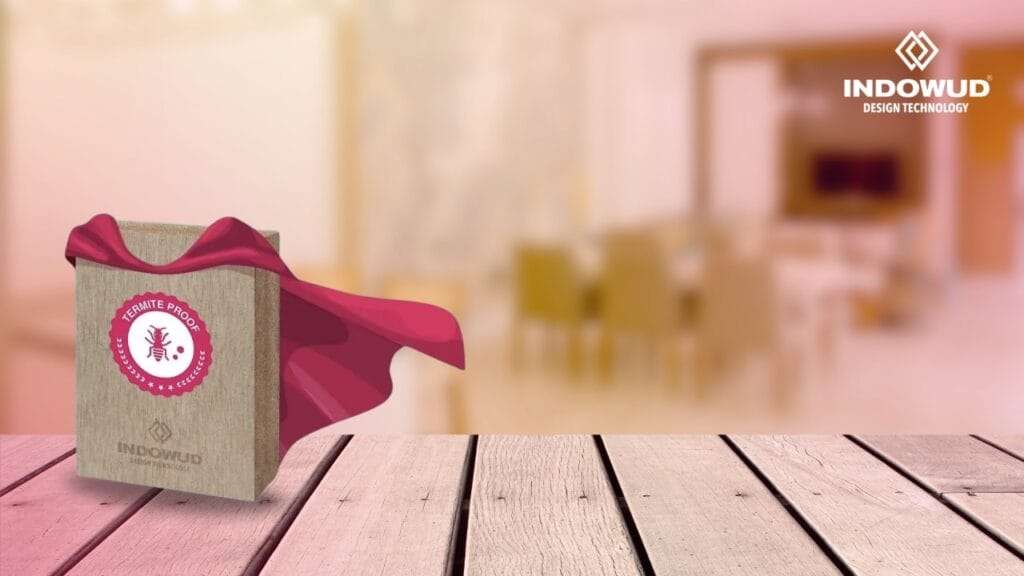
You don’t really think about termites — until you have to.
It usually begins with something small. A slightly loose hinge. A cupboard door that refuses to close properly. A fine powder near the skirting. One day you tap the wood and it sounds hollow.
By then, the damage has already started.
For homeowners, architects, and builders, termite damage is one of the most frustrating maintenance problems in interior construction. That’s why the conversation is slowly shifting toward termite proof boards, especially those made using rice husk technology.
But one question always comes up first: What is the termite proof board price, and is it worth it?
Understanding Termite Proof Board Price in Today’s Market
When people compare materials, the first thing they look at is the price tag.
In many markets, termite proof boards may cost slightly more than standard plywood. That’s often where hesitation begins.
But focusing only on the upfront cost ignores the larger picture.
Termite damage rarely stops at the first panel. It can quickly lead to:
- Repair costs
- Replacement expenses
- Labour charges
- Hidden structural damage
Once these factors are considered, the initial termite proof board price starts to look very different.
Boards made from rice husk, such as Indowud NFC, are engineered differently from traditional wood panels. Instead of relying on chemical coatings that can weaken over time, their resistance comes from the composition of the material itself.
That difference plays a major role in long-term performance.
What Makes Rice Husk Boards Different?
Rice husk boards are manufactured using agricultural waste — primarily the outer shell of rice grains.
Instead of being burned as waste, this material is processed and bonded into durable construction boards.
One important characteristic of rice husk is its low cellulose content compared to natural wood. Since termites feed primarily on cellulose, the material is far less attractive to them.
Beyond termite resistance, rice husk boards can offer several practical advantages:
- Dimensional stability
- Moisture resistance
- Strong screw holding capacity
- Smooth finishing surface
- Long service life
These characteristics make them suitable for many interior applications.
Price vs Performance: Looking at the Bigger Picture
When evaluating termite proof board price, the smarter question is not “What does it cost today?” but “What will it cost over time?”
Let’s look at the lifecycle perspective.
1. Initial Investment
Termite proof boards may cost slightly more than untreated plywood depending on supplier and region.
2. Reduced Pest Control Costs
Since the core material is less susceptible to termite attack, the need for repeated chemical treatment can be reduced.
3. Lower Structural Repair Risk
When termites cannot damage the internal structure of boards, the chances of major cabinet or panel failure decrease.
4. Longer Replacement Cycle
Durable boards generally require fewer replacements during the life of the interior.
For many projects, these factors balance out the initial price difference within a few years.
That’s why contractors and developers increasingly evaluate materials based on lifecycle performance, not just purchase price.
Indoor Air Quality Considerations
Traditional termite-resistant materials sometimes rely on chemical treatments applied during manufacturing.
Rice husk–based boards approach the problem differently. Because their resistance is largely structural rather than chemical, many products are available with low VOC or zero added VOC formulations.
This can be particularly beneficial in environments such as:
- Kitchens
- Bedrooms
- Schools
- Hospitals
- Offices
When selecting interior materials, indoor air quality is becoming just as important as durability.
Naturally Termite Resistant — Not Just Treated
Many conventional boards achieve termite resistance through surface treatments. Over time, those treatments can degrade.
Rice husk composite boards, on the other hand, rely on their structural composition. Since termites cannot easily digest the material, resistance is built into the board itself rather than applied externally.
That distinction is important when considering long-term performance.
Where Rice Husk Boards Are Used
Today, rice husk boards are used in a wide range of interior applications:
- Kitchen cabinets
- Wardrobes
- Office workstations
- Partition walls
- Door frames
- Decorative wall panels
Their combination of termite resistance, moisture stability, and durability makes them particularly useful in tropical climates where termite activity is common.
Comparing Traditional Plywood and Rice Husk Boards
| Feature | Traditional Plywood | Rice Husk Board |
| Termite Resistance | Chemical treatment required | Naturally resistant |
| Maintenance | Periodic treatment | Minimal |
| Lifespan | Moderate | Longer |
| VOC Emissions | Possible | Low or none |
| Raw Material | Timber | Agricultural waste |
Is the Higher Price Justified?
Let’s assume the termite proof board price is 10–20% higher than regular plywood.
Now consider the long-term costs:
- Termite treatment over several years
- Cabinet replacements
- Labour expenses
- Downtime in commercial interiors
When evaluated over a longer period, the difference often becomes smaller than expected.
For property developers and architects, this is why termite-proof materials are increasingly seen as a long-term investment rather than a short-term expense.
Final Thoughts
Termites rarely attract attention until the damage becomes visible.
By that point, repairs can be expensive and disruptive.
Choosing a material designed to resist termite attack from the beginning can help avoid those problems entirely.
So the real question may not be “What is the termite proof board price?”
It may be “What is the cost of ignoring termite protection in the first place?”
When viewed from that perspective, performance often becomes more important than the initial price.

Leave a Reply