
Best Water Resistant Boards for Kitchens and Bathrooms: Why Rice Husk Panels Work
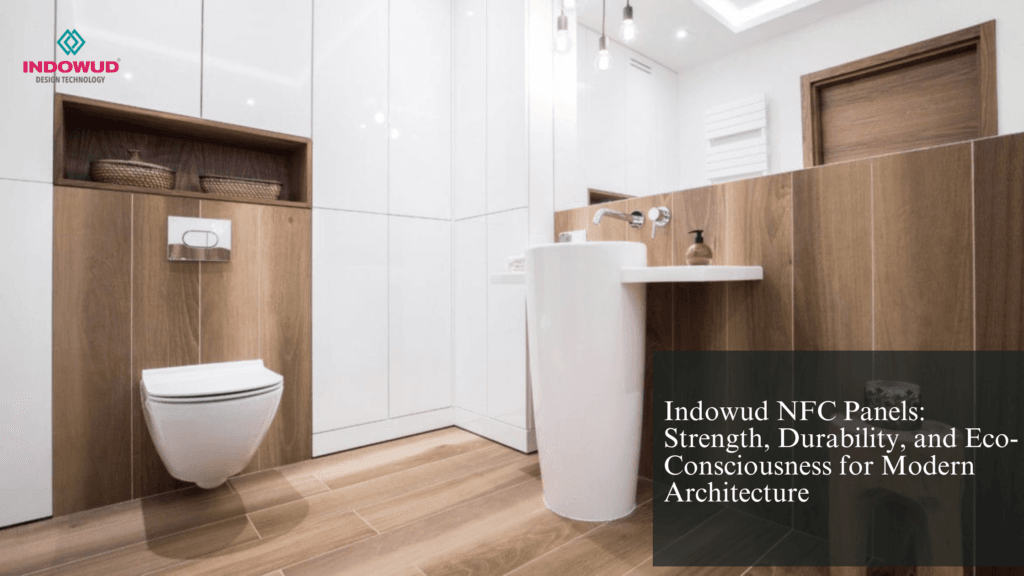
Water Resistant Boards for Kitchens and Bathrooms: Why Rice Husk Works
If you are planning a kitchen in Dubai or a bathroom in Delhi, the first thing to think about is not tiles or colour. It is the water resistant board behind everything.
Because once moisture gets inside, even the best design begins to fail.
A reliable water resistant board does more than prevent leaks. It protects cabinets, partitions, door frames, and wall panels from daily steam, splashes, and humidity. And today, when people ask “Which board is best for wet areas?” the answer is gradually moving beyond traditional plywood to engineered materials such as rice husk panels like Indowud NFC.
Let’s look at why.
Why Water Resistant Boards Matter in Wet Areas
A normal plywood sheet may look fine in the first year. Over time, the problems start appearing.
Edges begin to swell.
Laminate bubbles.
Moisture enters the core.
Fungus develops slowly.
Within a few years, replacement becomes inevitable.
A proper water resistant board is designed to handle this environment. Boards engineered for moisture resistance remain stable even when exposed to humidity, steam, or occasional water contact.
This is why many builders in cities such as Bengaluru, Kochi, and Mumbai are shifting from conventional plywood to engineered panels designed specifically for wet zones.
Rice Husk Interior Panels and Moisture Stability
Rice husk interior panels are manufactured using agricultural waste — primarily the outer shell of rice grains — combined with engineered binders.
One interesting property of rice husk is its natural silica content.
Silica helps resist moisture penetration, which improves dimensional stability. In practical terms, that means panels made from rice husk are less likely to swell, warp, or degrade when exposed to humidity.
Unlike conventional wood-based panels, rice husk boards also tend to be naturally resistant to termites and fungal growth, which is particularly useful in kitchens, bathrooms, and coastal environments.
In humid regions like Chennai or Kochi, this difference becomes noticeable over time.
Water Resistant Board vs WPC Ply Board
Another comparison often comes up: water resistant board vs WPC ply board.
Both claim moisture resistance, but they behave differently.
WPC boards contain a high proportion of plastic polymers. They resist water well, but in some applications they lack the machining feel and structural strength designers expect from wood-based materials.
Rice husk boards, on the other hand, offer several practical advantages:
- Strong screw holding capacity
- Workability similar to wood panels
- Compatibility with laminates and veneers
- More sustainable raw materials
While WPC boards rely heavily on plastic content, rice husk panels utilize agricultural byproducts that might otherwise be burned as waste.
That creates a more circular approach to material use.
Which Board Is Best for Wet Areas?
Architects and homeowners ask this question constantly.
A reliable board for wet areas should:
- Resist swelling in humid environments
- Prevent fungal growth
- Maintain structural strength
- Avoid delamination
- Support healthy indoor air quality
Engineered rice husk boards, such as Indowud NFC, are designed to meet many of these requirements and are increasingly used in wet interior spaces.
Common applications include:
- Kitchen cabinets
- Bathroom vanity units
- Utility room storage
- Commercial kitchens
- Spa and pool changing rooms
Even in coastal properties where salt-laden air damages regular wood products, moisture-resistant panels can perform more consistently.
Practical Applications in Modern Homes
Water Resistant Boards for Cabinets and Partitions
In modern apartments across Delhi NCR and other urban centres, designers are increasingly using water resistant boards for modular kitchens.
The benefits are practical: reduced swelling, stable cabinet shutters, and fewer maintenance issues.
Bathrooms are another common application. Instead of worrying about plywood warping behind mirrors or under sinks, builders often use engineered panels designed for humidity resistance.
In commercial spaces such as hospitals, restaurants, and retail interiors, moisture-resistant panels help maintain hygiene and structural durability.
Compared with some WPC boards, rice husk panels often provide better finishing compatibility with laminates and decorative surfaces.
Sustainability Advantages
One reason rice husk interior panels are gaining attention in markets such as India, the Middle East, and Europe is sustainability.
Rice cultivation produces massive quantities of husk waste every year. Much of it is traditionally burned, contributing to air pollution.
When this agricultural byproduct is converted into building panels, it reduces waste while creating useful materials.
Potential sustainability benefits include:
- Reduced dependence on timber
- Lower agricultural waste burning
- Lower embodied carbon in some systems
- Long service life in interior applications
For projects focused on responsible construction, this combination of durability and material reuse is increasingly attractive.
Long-Term Value
Many homeowners compare materials purely on upfront cost.
But the real cost of interior panels often appears years later.
Consider:
- Replacement after swelling
- Labour and downtime
- Re-lamination
- Termite treatment
Over a longer lifecycle, a stable and moisture-resistant panel system can reduce maintenance and replacement costs.
When evaluated over 5–10 years, engineered boards often deliver better value than basic plywood.
Final Thoughts
When people ask “Which board is best for wet areas?” the answer is becoming clearer.
The best option is a structurally stable, termite-resistant, moisture-resistant panel designed to perform in humid environments.
Rice husk-based boards are proving that sustainable materials can also deliver durability and long-term performance.
And in kitchens, bathrooms, and other wet areas, that quiet reliability matters more than most people realize.







Leave a Reply