
Top Benefits of Using Rice Husk Boards for Interior Panels
Rice Husk Boards for Interior Design: A Practical Overview
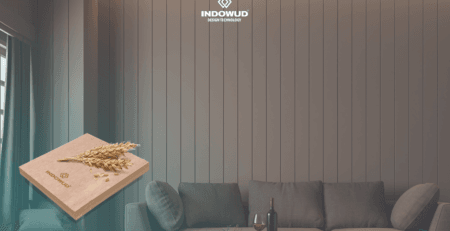
Today, when designing interior spaces, it is not only about how things look. Rooms also need to be safe, durable, and environmentally responsible. Rice husk boards such as Indowud NFC fit well into this approach, especially for interior panels, partitions, and even furniture applications.
Many problems with traditional materials are common. Cabinets may swell because of moisture, termites can damage wood panels, and sometimes new materials release unpleasant chemical smells. Rice husk boards like Indowud NFC help address many of these issues while maintaining strength and design flexibility. They work well for interior panels and can even perform reliably in areas where moderate moisture may be present.
Sustainability: Turning Waste Into a Resource
Sustainability is one of the strongest advantages of rice husk boards.
Every year, large quantities of rice husk are discarded or burned, which contributes to pollution. Using this agricultural byproduct to produce construction panels transforms waste into a useful resource.
Compared with traditional wood boards that require cutting down trees, rice husk boards reduce pressure on forests. As modern architecture increasingly focuses on reducing environmental impact, materials like Indowud NFC are becoming a preferred option.
Healthier Indoor Air Quality: Zero VOC Emissions
Indoor air quality is often overlooked when selecting construction materials.
Many conventional boards release volatile organic compounds (VOCs) from chemicals such as formaldehyde. Over time, these emissions may affect comfort and health.
Rice husk boards are designed to avoid these emissions, making them zero-VOC materials. This makes them suitable for homes, schools, and other spaces where healthy indoor environments are important.
Natural Termite Resistance: Less Maintenance, Lower Costs
Termites are a common problem, especially in humid climates.
Traditional wood panels often require chemical treatments to prevent termite damage, but the protection may not always last long. Rice husk boards naturally resist termite activity because of their composition.
This reduces the need for repeated treatments, lowers maintenance costs, and helps interior panels last longer.
Moisture Resistance: Ideal for Wet and Humid Areas
Rice husk boards such as Indowud NFC are designed to handle environments where moisture is present.
Traditional materials can swell, warp, or lose structural strength when exposed to high humidity. Over time, this affects both appearance and durability.
Rice husk boards have built-in moisture resistance, making them suitable for kitchens, bathrooms, and other humid environments. Because they remain stable, they require fewer repairs or replacements over time.
For designers working in high-moisture environments, this reliability offers additional peace of mind.
Design Flexibility Without Compromise
Rice husk boards also offer flexibility in design.
They can be finished with paint, laminates, veneers, or decorative coatings, similar to conventional panels. Designers can also apply CNC routing, digital printing, or veneer overlays to achieve different aesthetic effects.
In addition, these boards can be thermoformed, allowing experimentation with curved or parametric designs without compromising sustainability.
Long-Term Cost Value
Although traditional materials may appear cheaper at first, long-term costs often tell a different story.
Damage from moisture, termites, and regular wear can lead to frequent repairs or replacements. Rice husk boards such as Indowud NFC typically last longer and require minimal maintenance.
While the initial cost may sometimes be slightly higher, their durability often results in lower total ownership costs over the lifespan of the installation.
Conclusion: A Material Built for Modern Interiors
Interior design is gradually shifting toward materials that are more responsible and environmentally conscious.
Rice husk boards align with this trend by combining sustainability, durability, and healthier indoor air quality. They also help address common problems associated with traditional materials, including termite damage, moisture exposure, and chemical emissions.
For homeowners, architects, and designers looking for long-lasting interior panels, rice husk boards offer a practical solution that supports modern and sustainable construction.
FAQ
Do rice husk boards resist termites without chemical treatment?
Yes. Termites tend to avoid rice husk boards because their composition is different from traditional wood panels. Unlike plywood, which contains cellulose that attracts termites, rice husk boards do not provide a suitable food source for them.
Are rice husk boards safe for bedrooms and children’s spaces?
Traditional materials such as plywood or MDF may release VOCs like formaldehyde, which can affect indoor air quality. Rice husk boards such as Indowud NFC are designed to minimize these emissions, making them safer for spaces like bedrooms, schools, and homes.



Leave a Reply