
Top 7 Wood Alternatives for Furniture That Are Termite Proof Boards and Waterproof Boards
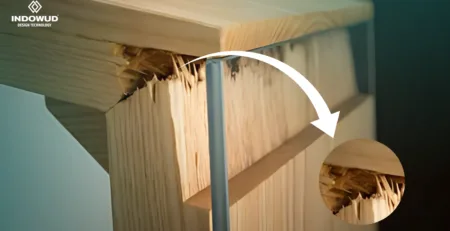
Solid wood furniture has a certain charm, no argument there. But charm doesn’t survive a termite colony or a leaking pipe under the sink, and a lot of furniture buyers learn that the hard way — usually a few years too late, when a wardrobe corner has already gone soft and crumbly. If you’re furnishing a home (or refurnishing one after exactly that kind of disappointment), here’s an honest look at the real wood alternatives worth considering, and where each one actually stands up.
1. Marine plywood
Marine plywood uses waterproof adhesive between layers and is treated for better moisture resistance than ordinary plywood. It’s a genuine step up for furniture in humid areas. The downside: it’s still made from wood veneers, so termite vulnerability hasn’t been removed, only reduced through chemical treatment that wears thin at cut edges over time. Termite infestation, sooner or later, is still a possibility.
2. Rice Husk-Based NFC Boards
This is where the real shift happens.
Natural Fibre Composite boards made from rice husk—like Indowud NFC—contain zero wood content, which means termite vulnerability isn’t reduced through treatment; it’s removed at the material level entirely.
Since there’s nothing organic for termites to target, even cut or drilled sections remain protected. These rice husk boards also function as a waterproof board, with moisture resistance built throughout the full thickness of the panel rather than applied only to the surface.
On top of pest and moisture resistance, Indowud NFC offers excellent density, strong screw-holding strength, fire retardant board performance, smoke-suppressant properties, anti-rodent resistance, and zero formaldehyde emissions for healthier indoor air.
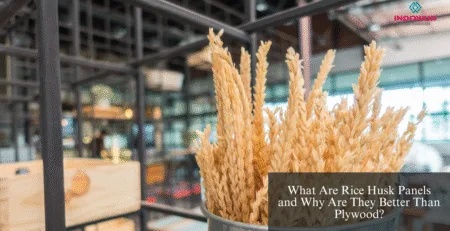
These rice husk panels machine and finish like timber, making them suitable for furniture boards, cabinetry, wardrobes, and decorative applications without sacrificing design flexibility.
3. WPC (Wood-Plastic Composite)
A WPC ply board offers improved resistance to moisture compared to timber.
The catch is that it still contains wood content, so termite vulnerability isn’t fully eliminated, only reduced. The plastic content may also become a fire-safety concern depending on the formulation.
4. Solid PVC Boards
Solid PVC foam boards are fully waterproof and pest-proof because they contain no organic material. They’re commonly used in modular kitchen shutters and bathroom cabinets.
The trade-off is mechanical strength.
5. Metal-Frame Furniture
Steel and aluminium frames are naturally immune to termites and water damage.
However, metal generally forms only the frame. It still requires panel materials for doors, shelves, tabletops, and cabinetry, meaning it doesn’t completely replace furniture boards.
6. MDF and HDF (Treated)
Medium and high-density fibreboards machine beautifully and accept paint and laminate very well.
However, standard MDF and HDF absorb moisture, swell under prolonged exposure, and depend heavily on chemical treatments for termite resistance rather than offering the inherent protection expected from a true termite proof board.
7. Bamboo Composite Boards
Bamboo has a genuinely strong sustainability story. It grows rapidly, regenerates naturally, and offers excellent environmental credentials.
Bamboo composites can be visually attractive and structurally capable.
However, raw bamboo naturally contains sugars and starches that attract pests. Their long-term durability depends heavily on manufacturing quality and treatment processes that are difficult for buyers to verify.
The Bottom Line
Indowud NFC avoids these limitations because there is no wood or plant sugar inside the material for pests to attack.
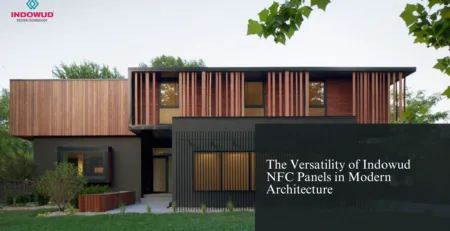
For exterior panels such as cladding, fencing, decking, and architectural screens, it withstands moisture, UV exposure, and termites without relying on surface treatments that eventually wear away.
For interior panels including cabinetry, wall panelling, furniture boards, and false ceilings, it combines zero formaldehyde emissions, fire retardant board performance, smoke suppression, and excellent dimensional stability.
One material serves both environments.
Most wood alternatives solve only one part of the problem—better moisture resistance but incomplete termite protection, or complete pest resistance with weaker structural performance.
Rice husk boards remain one of the few materials that combine waterproof board, termite proof board, and fire retardant board performance while also supporting healthier indoor environments.
For furniture designed to last well over a decade, rice husk panels like Indowud NFC continue to stand out as one of the most complete engineered material solutions available today.
Leave a Reply