
Long-Lasting Wood Alternatives: Investment-Worthy Materials for Your Home
If you have ever seen a wooden deck warp and crack after just a few rainy seasons, then you know the frustration of not using long-lasting wood.
The good news is that a new generation of materials has been created, like Indowud NFC, which does what wood cannot: retain its beauty for decades without the need for constant attention. If you are planning a backyard deck, exterior siding replacement, or a balcony redesign, there is an option for you that combines durability with performance.
The Top Wood Alternatives Worth Knowing About
Not every alternative is alike, so it is helpful to know what each one offers. Here is a short overview of alternatives that actually work in practice:
Composite Decking
Produced by combining wood fibers with recycled plastic, composite boards have quietly become a preferred material for outdoor decking. However, their plastic-like appearance does not always appeal to timber enthusiasts.
For the same purpose, Indowud NFC offers a stronger alternative. Made using agricultural husk technology, it delivers the look of natural timber while functioning as a durable rice husk boards solution and a sustainable choice for modern construction.
They look like real timber, do not swell in moist conditions, and are usually backed by warranties ranging from 25 to 50 years. Once installed, they require very little maintenance.
Fiber Cement Siding
A mixture of cement, sand, and cellulose fibers, fiber cement has gained a strong reputation in coastal climates. The material resists termites, does not support combustion, and can maintain performance for more than 50 years with proper finishing.
The disadvantage, however, is that it is heavy, difficult to customize, and limited in design flexibility.
Metal Siding (Aluminum & Steel)
When it comes to durability, metal is hard to beat. Aluminum, in particular, has a proven performance record of 40 to 100 years in harsh conditions.
It handles heavy rainfall well and remains one of the most durable choices for exterior panels and cladding systems.
Treated Bamboo
Bamboo remains one of the most sustainable options available because it regenerates rapidly and requires minimal harvesting impact.
It is versatile and provides a natural aesthetic. However, its performance can vary significantly depending on climate and treatment quality.
Thermally Modified Wood (Thermo-Ash)
This option is designed for people who love the look of natural timber and are unwilling to compromise on aesthetics.
The thermal modification process improves resistance to rot and moisture. You get the warmth of real wood with performance closer to synthetic materials, often lasting 25 years or more outdoors.
However, anything containing natural wood is never fully termite-proof and may struggle in highly humid environments.
Why Choose Indowud NFC?
| Material | Timber Look | Moisture Safe | Termite Proof | Sustainable | Customisable | Warranty |
|---|---|---|---|---|---|---|
| Indowud NFC | Yes | Yes | Yes | Agri-waste | Yes | 25–50 yr |
| Composite | No | Yes | Partial | Recycled plastic | Limited | 25–50 yr |
| Fiber Cement | No | Yes | Yes | No | No | 50+ yr |
| Metal Siding | No | Yes | Yes | Recyclable | Limited | 40 yr |
| Bamboo | Partial | Moderate | No | Very High | Limited | Varies |
| Thermo-Ash | Yes | Moderate | No | No | Yes | 25+ yr |
The main reason to choose Indowud NFC is that it performs strongly across all major requirements: aesthetics, durability, moisture resistance, termite resistance, and sustainability.
Every other option has at least one significant limitation.
- Composite decking often lacks the natural appearance of wood.
- Fiber cement is strong but heavy and difficult to customize.
- Metal siding is durable but lacks warmth and texture.
- Bamboo is sustainable but may not perform well in humid, termite-prone climates.
- Thermo-Ash still contains natural wood and remains vulnerable to moisture and pests over time.
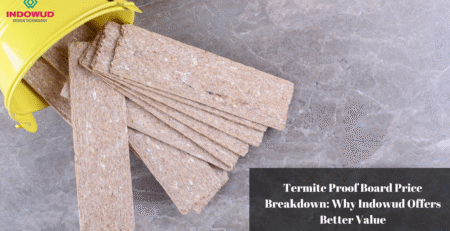
Indowud NFC is different because it is manufactured using agricultural husk instead of timber. This makes it function as a reliable termite proof board while maintaining dimensional stability in wet conditions.
Why Low-Maintenance Materials Make Financial Sense
The case for natural timber is often made around upfront cost, and rightly so—timber can often be sourced locally at a reasonable price.
But the real cost rarely ends there.
Annual sanding, staining, pest treatments, and repairs for cracks can quietly add up over the years.
Materials that offer long-term performance with minimal maintenance often provide better lifecycle value.
Choosing the Right Material for Outdoor Decking
Outdoor decking is perhaps the clearest example of how material selection impacts long-term results.
Some softwoods begin degrading after 10–15 years outdoors, even with regular maintenance.
Hardwoods such as Ipe and Siberian Larch can last longer but require ongoing oiling and upkeep.
Many of these maintenance requirements are largely eliminated with composite systems and modern waterproof board technologies such as Indowud NFC, which provide durability comparable to or better than traditional hardwoods.
Eco-Friendly Options Like Indowud NFC Do Not Sacrifice Quality
Indowud NFC is manufactured using agricultural waste husk. No trees are cut down, and the product does not release harmful emissions.
It has been verified through EPD and GreenPro certifications, making it suitable for sustainable construction projects and helping contribute toward green building goals.
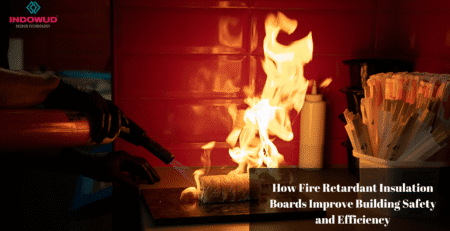
Unlike bamboo, timber, or thermo-ash, Indowud NFC also provides strong fire performance without relying on heavy chemical treatments. This makes it suitable for both interior panels and exterior applications where safety and durability are important.
At the end of its lifecycle, the material can also be recycled, further strengthening its environmental credentials.
Leave a Reply